


Büyükşehirden “Yaşlı Hakları” konulu seminer
Kocaeli Büyükşehir Belediyesi, kentteki bireylerin sosyal yaşamda daha aktif, bilinçli ve haklarının farkında bir şekilde yer almasını destekle yen çalışmalarına devam ediyor.

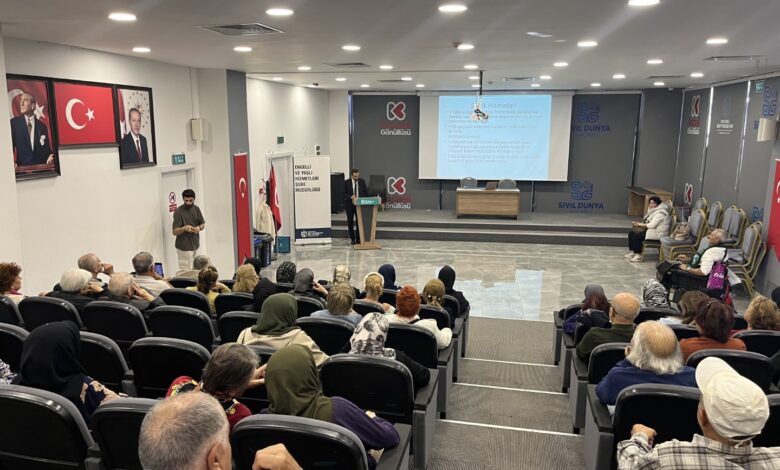
Büyükşehirden “Yaşlı Hakları” konulu seminer
Kocaeli Büyükşehir Belediyesi, kentteki bireylerin sosyal yaşamda daha
aktif, bilinçli ve haklarının farkında bir şekilde yer almasını destekle
yen çalışmalarına devam ediyor.
apsamda Saygınlar Kulübü üyelerine
yönelik “Yaşlı Hakları” konulu bilgilendirme semineri düzenlendi.
KARAKOÇ’TAN HUKUKİ SUNUM
Sivil Toplum Merkezi’nde gerçekleştirilen seminerde
Kocaeli Barosu Yönetim Kurulu Üyesi Av. Emir Karakoç, katılımcılara yaşlı bireylerin
sahip oldukları yasal haklar ve bu hakların korunmasına ilişkin önemlibilgiler aktardı.
Etkinlik, Kocaeli Büyükşehir Belediyesi’ne bağlı Saygınlar
Kulübü üyelerinin yoğun ilgisiyle gerçekleşti.
FARKINDALIK VE HAK BİLİNCİ VURGUSU
Av. Karakoç, hakların her alanda güçlendirilmesi ve korunması
gerektiğine dikkat çekerek, toplumsal bilinçlenmenin olası hak ihlallerinin
önüne geçilmesinde
önemli rol oynadığını belirtti.
Sunumun ardından
katılımcılardan gelen sorular yanıtlanarak interaktif bir paylaşım ortamı
oluşturuldu.
SOSYAL HAYATA AKTİF KATILIM
Kocaeli Büyükşehir Belediyesi Engelli ve Yaşlı Hizmetleri Şube
Müdürlüğü, kent genelinde 65 yaş üstü bireylerin sosyal etkinliklere
katılımını artırmayı am
açlayan projelerini sürdürüyor.
Saygınlar Kulübü
“Akademi Topluluğu” bünyesinde düzenlenen bu tür etkinliklerle yaşlı
bireylerin hem sosyalleşmesi hem de günlük yaşamda daha donanımlı
hale gelmesi hedefleniyor.
Kocaeli Büyükşehir Belediyesi’nden “Yaşlı Hakları” Semineriyle Farkındalık Vurgusu
Kocaeli Büyükşehir Belediyesi, kentte yaşayan bireylerin sosyal yaşama daha aktif ve bilinçli katılmalarını sağlamak amacıyla yürüttüğü çalışmalarına devam ediyor. Bu kapsamda, belediyeye bağlı Saygınlar Kulübü üyelerine yönelik olarak “Yaşlı Hakları” konulu bilgilendirme semineri düzenlendi.
Sivil Toplum Merkezi’nde gerçekleştirilen etkinlikte, Kocaeli Barosu Yönetim Kurulu Üyesi Av. Emir Karakoç, katılımcılara yaşlı bireylerin sahip oldukları yasal hakları ve bu hakların nasıl korunması gerektiğini detaylıca anlattı. Yoğun ilgi gören seminerde, Karakoç hukuki bir sunum gerçekleştirdi.
Av. Karakoç, sunumunda hakların her alanda güçlendirilmesi ve korunmasının önemine dikkat çekti. Toplumsal bilinçlenmenin, olası hak ihlallerinin önüne geçilmesinde kritik bir rol oynadığını vurguladı. Sunumun ardından katılımcılardan gelen soruların yanıtlanmasıyla interaktif bir paylaşım ortamı oluştu ve hak bilinci pekiştirildi.
Kocaeli Büyükşehir Belediyesi Engelli ve Yaşlı Hizmetleri Şube Müdürlüğü’nün yürüttüğü projelerle, kent genelinde 65 yaş üstü bireylerin sosyal etkinliklere katılımının artırılması hedefleniyor. Saygınlar Kulübü “Akademi Topluluğu” çatısı altında düzenlenen bu tür eğitim ve etkinliklerle, yaşlı bireylerin hem sosyal hayata daha fazla dahil olması hem de günlük yaşamda gerekli bilgi ve donanıma sahip olmaları amaçlanıyor. Bu seminer, yaşlıların hakları konusunda farkındalığı artırarak sosyal hayata aktif katılımlarını destekleyen önemli bir adım oldu.
Why Low Deposit Casinos Are Growing in New Zealand According to 5DollarDepositCasinos
The New Zealand online gambling market has undergone a quiet but significant structural shift over the past several years. Where once the standard minimum deposit at most online casinos hovered around NZD 20 to NZD 30, a growing number of platforms now accept deposits as low as NZD 5 — and in some cases even less. This is not a coincidence or a temporary promotional tactic. It reflects deeper changes in player demographics, payment technology, regulatory posture, and competitive dynamics that together have made low deposit casinos a durable and expanding segment of the New Zealand market. Understanding why this is happening requires looking beyond the surface-level appeal of “affordable gambling” and examining the structural forces that are reshaping how New Zealanders engage with online casino platforms.
The Regulatory Environment That Enables Low Deposit Models
New Zealand’s gambling legislation is governed primarily by the Gambling Act 2003, which was designed with land-based gambling firmly in mind. Under this framework, the Department of Internal Affairs (DIA) oversees domestic gambling operations, but the Act does not explicitly prohibit New Zealand residents from accessing offshore online casinos. This legal ambiguity — sometimes described as a “grey market” — has created a situation where dozens of internationally licensed operators serve New Zealand players without being subject to direct local regulation. The practical consequence is that these operators compete aggressively for New Zealand customers without the compliance overhead that a fully regulated domestic market would impose.
This competitive pressure has been one of the primary drivers behind the reduction in minimum deposit thresholds. Operators licensed in jurisdictions such as Malta (under the Malta Gaming Authority), Gibraltar, Curaçao, and the Isle of Man are free to set their own deposit minimums when targeting the New Zealand market. Without a domestic regulator mandating a floor on deposit amounts, the market has naturally trended toward lower barriers to entry as a competitive differentiator. Casinos that might otherwise maintain higher minimums for administrative cost reasons have found that NZD 5 deposit options are technically feasible — particularly with modern payment processing infrastructure — and commercially attractive in a market where player acquisition costs are high.
The New Zealand government has periodically signalled interest in reforming its online gambling framework. A 2020 review by the Department of Internal Affairs acknowledged the scale of offshore gambling activity and the limitations of the existing Act in addressing it. However, as of the mid-2020s, no comprehensive licensing regime for offshore operators has been enacted. This regulatory inertia has, paradoxically, sustained the conditions under which low deposit casinos continue to proliferate. Operators face minimal compliance barriers when entering the New Zealand market, which keeps the cost of offering low deposit products manageable.
It is also worth noting that the Gambling Act 2003 does place restrictions on advertising by offshore operators, and the Advertising Standards Authority has issued guidance on gambling promotions. However, enforcement in the online space remains limited. This means that low deposit casinos can market their offerings to New Zealand audiences with relatively few restrictions, further accelerating their growth. The regulatory landscape, in short, has not constrained the low deposit model — it has inadvertently enabled it.
Payment Technology and the Economics of Small Transactions
A decade ago, processing a NZD 5 deposit was genuinely impractical for most online casinos. Credit card processors charged flat fees per transaction that could consume a significant portion of a small deposit, and bank transfer systems imposed minimum thresholds that made micro-deposits economically unviable. The technical and financial infrastructure simply did not support low minimum deposits at scale. What has changed is the rapid maturation of alternative payment methods that have fundamentally altered the economics of small transactions.
E-wallets such as Skrill and Neteller, both of which have substantial user bases in New Zealand, charge percentage-based fees rather than flat transaction fees. This makes them far more suitable for small deposits — a 1% to 2% fee on a NZD 5 deposit is cents, not dollars. The widespread adoption of these platforms among New Zealand casino players has made the NZD 5 deposit model financially viable for operators. Similarly, the emergence of prepaid voucher systems — including Paysafecard, which is available at many New Zealand retailers — has provided a payment method that carries low processing costs and is particularly popular among younger players who may not have or prefer not to use traditional banking products for gambling purposes.
Cryptocurrency has also played a role, though a more niche one. Bitcoin and other cryptocurrencies carry negligible transaction fees at the network level, making them theoretically ideal for micro-deposits. A small but growing segment of New Zealand casino players uses cryptocurrency for deposits, and some platforms have introduced NZD 1 or NZD 2 minimums specifically for crypto deposits. While this remains a minority of overall volume, it represents the logical endpoint of the trend toward lower deposit thresholds enabled by payment technology.
The aggregation of player data and behaviour analytics has also made low deposit players more commercially attractive than they might appear at first glance. Platforms that track lifetime player value have found that players who start with small deposits often graduate to larger deposits over time, particularly if their early experience with the platform is positive. This means the NZD 5 deposit is not just a loss leader — it is a customer acquisition mechanism with measurable long-term value. Research compiled by platforms tracking the New Zealand market, including data referenced at https://www.5-dollar-deposit-casinos.com, indicates that the conversion rate from low deposit trial players to regular depositors is higher than many operators initially expected, which has encouraged further investment in the low deposit product category.
The competitive dynamics of the payment processing market itself have also contributed. As more casinos have adopted e-wallet and prepaid card integrations, the per-transaction costs for these methods have declined further due to volume-based pricing agreements between operators and payment processors. This creates a self-reinforcing cycle: more casinos offer low deposits, more players use them, volumes increase, costs decrease, and the model becomes more profitable — which in turn encourages more casinos to adopt it.
Demographic Shifts and Changing Player Expectations
The growth of low deposit casinos in New Zealand cannot be fully explained by regulatory and technological factors alone. There has been a meaningful demographic shift in the online casino player base that has driven demand for lower deposit thresholds from the consumer side. The cohort of players who came of age with smartphones and digital-first financial services has fundamentally different expectations about how online gambling should work compared to players who adopted online casinos in the early 2000s.
Younger New Zealand players — broadly those in the 25 to 40 age bracket who represent the fastest-growing segment of the online casino market — are accustomed to freemium models, trial periods, and low-commitment entry points across all categories of digital entertainment. Streaming services offer free trials. Mobile games offer free-to-play with optional purchases. App stores allow one-tap purchases of small amounts. The expectation that a new digital service should be accessible at minimal cost before a significant commitment is made is deeply embedded in the consumer psychology of this demographic. Low deposit casinos align naturally with this expectation.
There is also a financial dimension. New Zealand household debt levels have remained elevated through the 2020s, and cost-of-living pressures — particularly in Auckland and Wellington — have constrained discretionary spending for many consumers. In this environment, the ability to engage with online casino entertainment for NZD 5 rather than NZD 20 or NZD 30 is genuinely significant for a portion of the player base. This is not to suggest that low deposit casinos primarily serve financially stressed players — the evidence does not support that conclusion — but rather that the lower threshold removes a genuine barrier for players who want to engage casually and with defined spending limits.
Responsible gambling considerations have also shaped player preferences in ways that favour low deposit models. There is growing awareness among New Zealand players — partly driven by public health campaigns and partly by the broader global conversation about gambling harm — of the importance of setting and adhering to deposit limits. A NZD 5 minimum deposit is inherently compatible with responsible gambling behaviour: it allows players to engage with casino products without committing to amounts that could create financial strain. Platforms that have positioned their low deposit offering within a responsible gambling framework — emphasising deposit limits, session controls, and self-exclusion tools — have found this resonates with a segment of the New Zealand market that wants to participate in online gambling but is conscious of the risks.
The rise of mobile gaming has reinforced these trends. New Zealand has one of the highest smartphone penetration rates in the Asia-Pacific region, and a substantial proportion of online casino play now occurs on mobile devices. Mobile gaming sessions tend to be shorter and more frequent than desktop sessions, which aligns well with the low deposit model. A player who deposits NZD 5 and plays for 20 to 30 minutes during a commute or lunch break is engaging with the product in a fundamentally different way than a player who deposits NZD 100 for an extended evening session. Casinos that have recognised this shift have designed their low deposit products specifically for mobile-first engagement, with game selections, bonus structures, and interface designs tailored to shorter, lower-stakes sessions.
How the Low Deposit Casino Market Has Structured Itself
The growth of low deposit casinos has not been a chaotic proliferation of undifferentiated products. Over time, a recognisable market structure has emerged, with distinct tiers and specialisations that reflect the diversity of the New Zealand player base. Understanding this structure helps explain why the segment has proven durable rather than a passing trend.
At the most accessible end of the market are casinos with NZD 5 deposit minimums that accept this threshold across all payment methods, including e-wallets, prepaid cards, and in some cases credit cards. These platforms typically offer a bonus structure calibrated to small deposits — a 100% match on a NZD 5 deposit yields NZD 10 in playable funds, which is enough to meaningfully engage with a range of slot games or low-stakes table games. The bonus wagering requirements on these offers tend to be higher than on larger deposit bonuses, reflecting the operator’s need to manage the economics of small-value promotions. Players who understand this dynamic — and many experienced players do — use low deposit bonuses strategically, treating them as a way to explore a new platform’s game library and user experience before committing larger amounts.
A second tier consists of casinos that offer NZD 5 minimums specifically for certain payment methods — typically e-wallets — while maintaining higher minimums for bank transfers and cards. This tiered approach reflects the different processing costs associated with different payment methods and is a pragmatic response to the economics of the low deposit model. It has the additional effect of encouraging players toward payment methods that are more efficient for the operator, which aligns the operator’s interests with broader trends in digital payment adoption.
Specialist information platforms have developed alongside the casinos themselves to help players navigate this market. Resources like 5DollarDepositCasinos have emerged as reference points for New Zealand players seeking to compare low deposit options, understand bonus structures, and identify which platforms offer genuine value at the NZD 5 level versus those that technically advertise a low minimum but impose conditions that make it impractical. The existence of such resources is itself evidence of market maturity — specialised information services emerge when a market segment is large enough and complex enough to warrant them.
The game mix at low deposit casinos has also evolved in ways that reflect the specific needs of this market segment. Online slots remain dominant, as they can be played at stake levels as low as NZD 0.01 per spin, making a NZD 5 deposit capable of sustaining a meaningful session. However, live dealer games — which carry higher minimum bets — have become increasingly accessible at low deposit casinos as providers have introduced lower-stakes live tables specifically targeting this segment. Live roulette tables with NZD 0.10 minimum bets and live blackjack with NZD 0.50 minimums are now available at several platforms serving New Zealand, a development that would have been commercially unimaginable five years ago. This expansion of the live casino offering at low stakes is a significant development for the segment, as live dealer games represent the most immersive and socially engaging form of online casino play.
Loyalty programs at low deposit casinos have also adapted. Traditional loyalty schemes rewarded players based on the volume of money wagered, which inherently disadvantaged low deposit players. Newer loyalty structures at casinos targeting this segment reward frequency of play and engagement metrics — number of sessions, variety of games played, consistency of deposits over time — rather than raw wagering volume. This shift makes loyalty programs genuinely accessible to low deposit players and creates an additional incentive for this segment to remain with a single platform rather than spreading activity across multiple casinos.
The competitive intensity within the low deposit segment has also driven improvements in platform quality that benefit all players. Casinos competing for low deposit players cannot rely on large bonus offers alone — a 100% match on NZD 5 is not a compelling differentiator. Instead, they have invested in user experience, game library breadth, mobile optimisation, customer support responsiveness, and withdrawal speed. These are improvements that benefit all players, regardless of deposit level, and they have raised the overall standard of what New Zealand players can expect from online casino platforms.
The trajectory of low deposit casinos in New Zealand reflects a convergence of forces that are unlikely to reverse in the near term. Payment technology will continue to reduce the cost of small transactions. Demographic trends will continue to favour accessible, low-commitment entry points. The regulatory environment, absent significant reform, will continue to allow offshore operators to compete freely for New Zealand players. And the market infrastructure — the casinos, the payment processors, the information platforms, the game developers producing low-stakes content — has now reached a scale and sophistication that gives it considerable momentum. What began as a niche offering for budget-conscious players has become a mainstream segment of the New Zealand online casino market, reshaping player expectations and operator strategies in ways that will define the industry for years to come.